
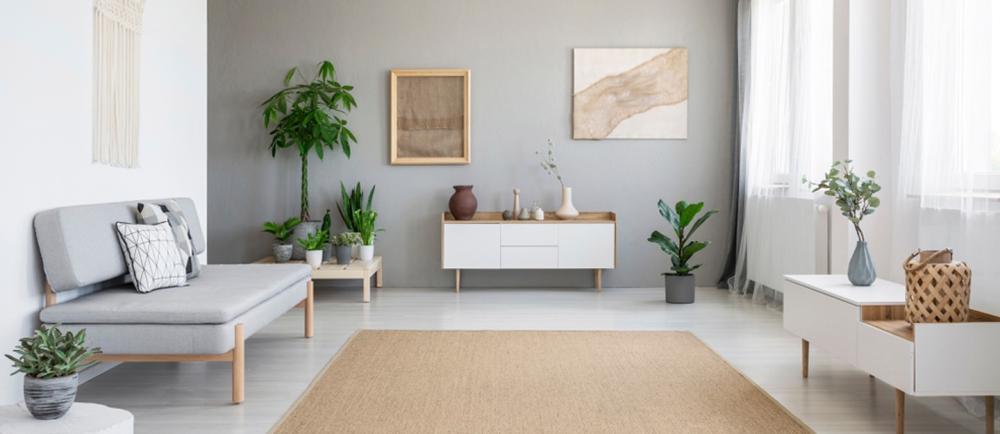
Home furniture arrangement: ideas and tips
A practical guide to creating a comfortable and stylish space
Arranging furniture in your home isn't a random task; it's a fundamental element in designing spaces that reflect comfort and personal taste. Good organization helps utilize every corner intelligently, making your home appear more spacious and harmonious. Whether you're renovating your entire house or rearranging a single room, following a well-thought-out plan will easily give you a professional result.
Essential steps for arranging furniture perfectly
The first step is to accurately measure the space before moving any furniture. Knowing the room's dimensions helps you choose the right pieces and avoid clutter that spoils the overall look. It also makes it easier to arrange the furniture in a practical and comfortable way.
Next, it's important to identify a focal point within the room, such as a visually striking element like a television or a window with a view. Arranging furniture around this focal point gives the room a more organized look and creates a clear visual balance.
Ample space should also be left for movement between different pieces. Wide aisles facilitate movement within the room and prevent a feeling of clutter. Therefore, always try to leave well-considered gaps between furniture without overfilling the space.
Balance is an essential element; large and small pieces should be distributed harmoniously within the room. Placing all the furniture on one side creates a feeling of discomfort, while a balanced distribution gives a sense of stability and beauty.
If space is limited, it's best to rely on multi-functional furniture such as folding tables or sofas with built-in storage. These solutions offer
Additional space and increased efficiency of use.
Practical ideas for arranging each room
In the living room, the sofa should ideally be the focal point, positioned as the centerpiece. A coffee table can be placed in the middle, ensuring adequate space for movement, and cushions can be added to create a warm and inviting atmosphere.
In the bedroom, it's advisable to place the bed against the center of the longer wall for visual balance. Using small bedside tables saves space, and the area under the bed can be used for storage.
For the dining room, it's best to place the table in the center if space allows, and choose appropriately sized chairs. Adding a central light fixture such as a chandelier enhances the room's aesthetic appeal.
In a home office, it's best to place the desk near a source of natural light, such as a window, and use shelves to organize tools and books. Choosing a comfortable chair is essential for maintaining comfort while working for extended periods.
Common mistakes to avoid
One of the most common mistakes is cluttering a room with unnecessary furniture, which reduces comfort and detracts from the overall appearance. Similarly, neglecting lighting can negatively impact the aesthetics of the design, so careful attention should be paid to its distribution.
Choosing furniture without considering its function is also a big mistake, as furniture should combine an attractive appearance with practical use.
Simple touches make a big difference
Small details can make a big difference, such as placing a rug under furniture to visually group items together, or adding houseplants to bring life to a space. Mirrors also help create a sense of spaciousness and increase light.